Ever dreamt of waking up to a perfectly smooth, refreshingly cool coffee, without the daily cafe run or the bitter bite of iced drip? If so, diving into the world of cold brew is your next adventure, and finding the best at home cold brew maker is your first exciting step. This guide is designed to help you navigate the options, understand the science, and ultimately, craft your ideal coffee experience right from your kitchen.
Cold brew has become a sensation for a reason: it’s a game-changer for anyone who loves coffee but dislikes its traditional acidity and bitterness. With a dedicated cold brew maker, you’re not just making coffee; you’re unlocking a smoother, sweeter, and incredibly versatile concentrate that’s ready whenever you are. Say goodbye to stale coffee and hello to a consistently delicious, less acidic cup, every single time.
|
Our Picks for the Best Cold Brew Maker in 2026
As an Amazon Associate I earn from qualifying purchases.
|
||
| Num | Product | Action |
|---|---|---|
| 1 | Wancle Electric Coffee Grinder, Spice Grinder, One Touch Coffee Mill for Beans, Spices and More, with Clean Brush Black |

|
| 2 | Hamilton Beach Custom Grind Electric Coffee Grinder for 4-14 Cups, One-Press Hand-Free Operation with Auto Shutoff, Removable Grinding Bowl For Easy Pour and Clean, Stainless Steel (80406) |
|
| 3 | Amazon Basics Electric Coffee Grinder, Coffee Bean and Spice Grinder, With Heavy-Duty Stainless Steel Grind Blades |
|
| 4 | KRUPS Precision Electric Coffee Grinders, 3 oz Capacity, 200W Motor, Stainless Steel Blades for Uniform Grinding of Beans, Herb and Nuts, Coffee and Spice Grinder Electric, (Black) |
|
| 5 | Coffee Grinder Electric - Quiet Stainless Steel Blade Coffee Bean Grinder And Spice Grinder - Great For Coffee Beans And Spices - Small Coffee Grinder Perfect For At Home Coffee Enthusiasts |
|
| 6 | Proctor Silex Electric Coffee Grinder for Beans, Spices and More, Stainless Steel Blades, 12 Cups, White |
|
| 7 | Cuisinart Coffee Grinder, Electric One-Touch Automatic Burr Coffee Grinder with 18-Position Grind Selector, Cup Size Selector for 4 – 18 Cups, DBM-8P1, Black Stainless |
|
| 8 | OXO Brew Conical Burr Coffee Grinder - Silver, Stainless Steel Burrs, One-Touch Automatic Smart Grind |
|
| 9 | BLACK+DECKER One Touch Coffee Grinder, 2/3 Cup Coffee Bean Capacity, Spice Grinder, One Touch Push-Button Control -150 Watts -Stainless Steel Blades |
|
| 10 | Hamilton Beach Fresh Grind Electric Coffee Grinder for Beans, Spices and More, Stainless Steel Blades, Removable Chamber, Makes up to 12 Cups, Black |
|
What is a Cold Brew Maker and Why You Need One at Home
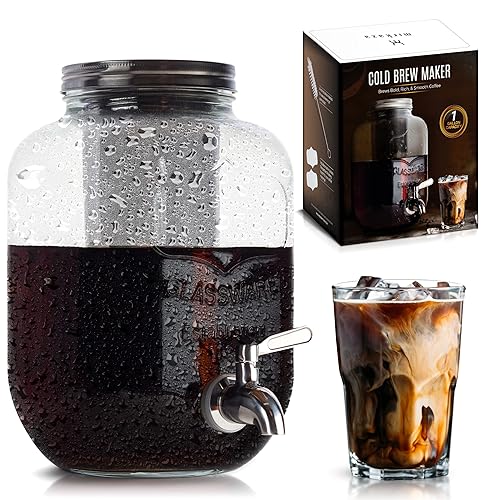
At its heart, a cold brew maker is a simple yet ingenious device that facilitates the steeping of coarsely ground coffee in cold or room-temperature water for an extended period, typically 12 to 24 hours. Unlike traditional hot brewing methods that use heat to extract flavors, cold brewing relies on time, drawing out the coffee’s nuanced oils and sugars while leaving behind the bitter compounds and much of the acidity.
Why invest in one for your home? Beyond the remarkable taste difference—a smoother, sweeter, and richer coffee concentrate—a dedicated cold brew maker simplifies the entire process. It streamlines steeping, filtering, and often even storage, transforming what could be a messy, multi-step DIY into an effortless routine. Imagine the convenience of having a week’s worth of coffee concentrate ready in your fridge, saving you time and money compared to daily cafe purchases.
“The beauty of cold brew lies in its gentle extraction,” explains Professor Anya Sharma, a coffee science expert and founder of Brew Insights. “By avoiding high temperatures, you prevent the release of compounds that lead to bitterness, resulting in a naturally sweeter and more palatable coffee.”
Navigating the Market: Popular Types of Cold Brew Makers and How to Choose
The market for home cold brew makers offers a delightful variety, each designed to fit different lifestyles and preferences. Understanding the main types and key features will empower you to choose the perfect companion for your daily caffeine ritual.
Immersion Brewers
These are arguably the most common and user-friendly types. Immersion brewers involve placing coffee grounds directly into a chamber of water, allowing them to steep together before being filtered. Many popular models, such as those from Takeya, OXO, Toddy, Mueller, and Hario, fall into this category. They are often lauded for their simplicity, ease of cleaning, and consistent results, making them ideal for beginners and seasoned cold brew enthusiasts alike.
Cold Drip Systems (Kyoto Style)
For the connoisseur who appreciates a touch of theatricality and precision, cold drip systems are a stunning choice. These brewers slowly drip cold water over coffee grounds, extracting the concentrate drop by drop. While they can be more visually striking and often produce a very clean brew, they tend to be more expensive and take up more counter space. They also require careful adjustment to achieve the desired drip rate.
Rapid Cold Brewers
If patience isn’t your strongest virtue, rapid cold brewers might catch your eye. Brands like DASH offer models that use vacuum press technology to drastically reduce brewing time, delivering a batch of cold brew in minutes rather than hours. This is a fantastic option for those spontaneous cold brew cravings, but ensure the flavor profile meets your expectations, as the fast extraction method can differ from traditional slow steeping.
Key Features to Consider When Buying
When searching for the best at home cold brew maker, several factors come into play:
- Capacity: Do you drink coffee solo or brew for the whole family? Makers range from compact 1-quart (32 oz) models perfect for one person, like the OXO Compact, to larger 64-ounce or even gallon-sized systems for bigger batches. Consider how much concentrate you’ll consume in a week.
- Material: Most brewers come in glass or durable BPA-free plastic. Glass carafes are often preferred for purity of flavor and aesthetics, as they don’t absorb odors, but they are more fragile. Plastic is more durable and often more budget-friendly. Stainless steel elements are also common, especially in filters.
- Filter Quality: This is crucial for a clean, sediment-free brew. Look for precision-cut, fine mesh filters, often made of stainless steel, that effectively separate grounds from the concentrate without absorbing essential coffee oils.
- Ease of Cleaning: A good cold brew maker should have easily removable, and ideally, dishwasher-safe parts. Designs that minimize mess are a significant plus.
- Design and Footprint: Consider how it will fit into your kitchen and fridge. Square designs or models with spigots for direct dispensing (like some KitchenAid models) can be very convenient.
- Special Features: Some makers include innovative “Rainmaker” lids for even water saturation (OXO), airtight seals for longer storage (Ovalware), or integrated spigots for easy serving.
“Don’t just chase the cheapest option,” advises Marcus “The Bean Whisperer” Thorne, a master roaster and cold brew enthusiast. “A well-designed filter and a durable, easy-to-clean construction are worth every penny for a consistently great cold brew experience.”
Crafting the Perfect Brew: A Step-by-Step Guide to Using Your Cold Brew Maker
Making cold brew at home is surprisingly straightforward once you understand the basic process. Here’s how to unlock its full potential:
The Right Grind Matters
This is perhaps the most critical step. For cold brew, you need a coarse grind—think cornmeal, not fine powder. A coarse grind prevents over-extraction, which can lead to bitterness, and also makes filtering easier, ensuring a cleaner concentrate. If you’re grinding your own beans, use the coarsest setting on your grinder. If buying pre-ground, ask for a coarse grind suitable for French press or cold brew.
Coffee-to-Water Ratio
While personal preference plays a big role, a common starting point for a cold brew concentrate is a 1:4 or 1:5 ratio of coffee to water by weight. For example, 1 cup of coarse grounds to 4 cups of filtered water. Some experts recommend a slightly higher 1:6 ratio for concentrate. Remember, you’re making a concentrate that will be diluted later, so don’t be alarmed by its initial strength!
The Steeping Process
Combine your coarsely ground coffee with cold, filtered water in your cold brew maker. Stir gently to ensure all the grounds are fully saturated. Then, cover the container and let it steep. The ideal steeping time typically ranges from 12 to 24 hours. You can steep it at room temperature or in the refrigerator; the steeping time remains largely the same. Longer steeping times (up to 48 hours for some) can yield a stronger concentrate, but be mindful of potential over-extraction.
Filtering for Clarity
Once steeping is complete, it’s time to separate the grounds from your liquid gold. Most dedicated cold brew makers have integrated filters that make this simple. For immersion brewers, you’ll either remove a filter basket or use a release valve to drain the concentrate into a separate carafe. Ensure your filter is fine enough to catch all sediment, leaving you with a clean, clear concentrate.
Dilution and Enjoyment
Your cold brew concentrate is potent! It’s meant to be diluted to taste. A good starting point is a 1:1 ratio of concentrate to water or milk. Pour it over ice for a classic cold brew, or add your favorite milk or creamer. You can even gently warm it for a unique hot beverage experience, as the low acidity makes it smooth even when heated.
Expert Tips & Tricks to Optimize Your Cold Brew Flavor
Making cold brew is an art form, and a few insider tips can elevate your brew from good to extraordinary.
- Water Quality Matters Immensely: Just as with any coffee, the water you use is paramount. “If your tap water doesn’t taste good on its own, it won’t make good coffee,” states Professor Sharma. Always use filtered water for the cleanest, purest flavor extraction.
- Choose the Right Beans and Roast: While you can cold brew any coffee, a light or medium roast often shines best in cold brew, allowing more nuanced flavors to come through. Experiment with single-origin beans to discover unique profiles.
- Experiment with Steeping Times: Don’t be afraid to adjust your steeping time within the 12-24 hour window. A shorter steep might yield a lighter, brighter concentrate, while a longer one (up to 24 hours) will be bolder and more intense. Keep notes on your favorite combinations.
- Flavor Infusions: Get creative! Add spices like cinnamon sticks, vanilla beans, or even a few cardamom pods directly to your grounds during steeping for a flavored cold brew. Just remember to start small and adjust to your taste.
Cold Brew vs. Traditional Hot Coffee: Understanding the Benefits
While both are fantastic beverages, cold brew offers distinct advantages over traditional hot-brewed coffee:
- Lower Acidity: This is the most celebrated benefit. Because cold water doesn’t extract as many acidic compounds, cold brew is significantly less acidic (up to 60% less acidic), making it gentler on the stomach and a great option for those with acid reflux.
- Smoother, Sweeter Flavor: Without the bitterness often associated with hot brewing, cold brew naturally tastes sweeter and has a remarkably smooth, mellow mouthfeel.
- Higher Caffeine Content (Often): Since it’s typically brewed as a concentrate, cold brew can pack a more significant caffeine punch per serving, offering a refreshing energy boost.
- Versatility: Cold brew concentrate is a fantastic base for a wide array of drinks, from iced lattes and blended beverages to creative cocktails and even baking.
Storing and Enjoying Your Homemade Cold Brew
One of the greatest benefits of making cold brew at home is its excellent shelf life. Once brewed and filtered, your cold brew concentrate should be transferred to an airtight container and stored in the refrigerator. This keeps it fresh and flavorful for up to two weeks.
Beyond simply diluting it, get creative with your cold brew! Use it to make:
- Iced coffee and lattes
- Cold brew cocktails (think espresso martinis)
- Smoothies for an extra kick
- Flavorful additions to desserts or baking recipes
Frequently Asked Questions About Home Cold Brew Makers
Q: How long does homemade cold brew concentrate last in the fridge?
A: When stored in an airtight container in the refrigerator, homemade cold brew concentrate typically stays fresh and delicious for up to two weeks.
Q: Can I use regular coffee grounds for cold brew?
A: While you technically can use regular (finer) coffee grounds, it’s not recommended. A coarse grind is crucial for cold brew to prevent over-extraction, bitterness, and excessive sediment.
Q: What’s the best coffee-to-water ratio for cold brew?
A: A common starting point for cold brew concentrate is a 1:4 or 1:5 coffee-to-water ratio by weight. You can dilute this concentrate further with water or milk to taste, typically 1:1.
Q: Is cold brew healthier than hot coffee?
A: Cold brew is often considered gentler on the stomach due to its significantly lower acidity compared to hot coffee. This can be beneficial for those prone to indigestion or acid reflux.
Q: How do I clean my cold brew maker effectively?
A: Most cold brew makers are designed for easy cleaning. Look for models with removable, dishwasher-safe components. After each use, rinse the filter and container thoroughly, and consider a deeper clean with warm, soapy water regularly to prevent residue buildup.
Making cold brew at home is a delightful journey into a world of smoother, richer coffee. With the best at home cold brew maker as your tool, you’re not just brewing coffee; you’re crafting an experience tailored to your taste, offering convenience and a superior flavor profile that will make you wonder how you ever lived without it. So, choose your maker, experiment with your beans and ratios, and savor the refreshing difference of homemade cold brew. Your taste buds—and your wallet—will thank you!